3 ways to help the author that COST YOU ABSOLUTE ZERO ! see the bottom of the page.
August 2026
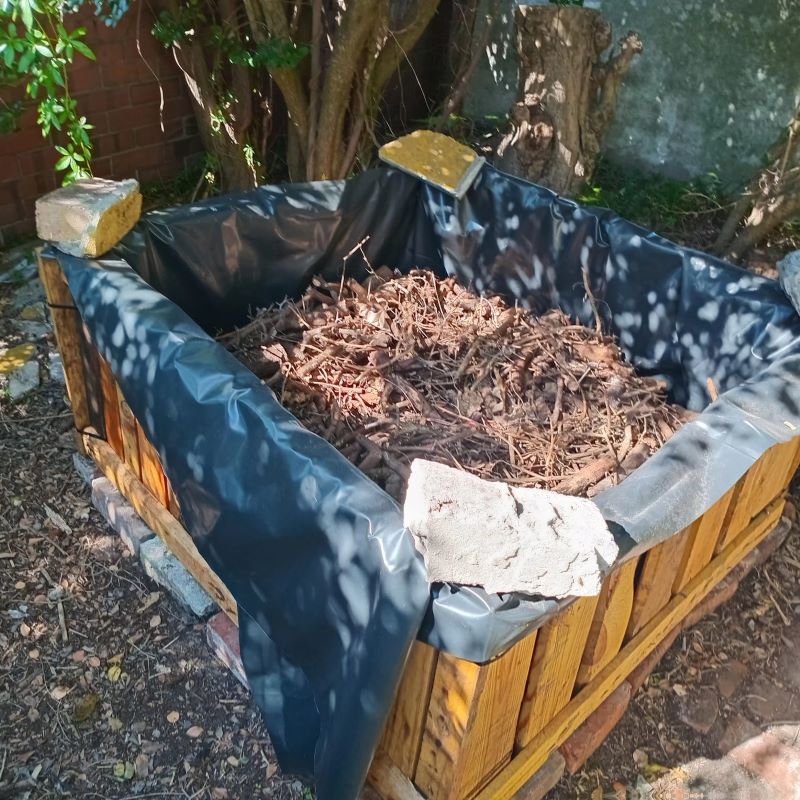 We built this raised bed from two pallets. I line it with plastic, add sticks and logs to half way, and fill up with growing medium. The garden's productivity leaps forward.
9th
The gardener George and I worked on lining another four food beds. One square meter bed made from pallets in the front, two smaller pallet beds against the south wall and one massive bed using the rest of a large brick bin once used for growing earthworms commercially. The medium and small sized firewood sticks went into the bottom of these three bins and afterwards there was nothing left on the woodpile. This was part of the sanitation process in the garden to discourage rats. After removing cosy above ground compost piles that stay warm and relatively dry in the rainy season, taking the compost underground so to speak, making sure kitchen waste went only into the large steel worm bin, and lifting wood piles into metal shelves, the rats slowly made fewer and fewer appearances and then vanished. The area where the wood piles lay on the ground are now level and can either be used to place flowbins or to grow plants which like fungus rich soil. George cut back the agave and dug it out, which was quite a job. Afterwards there was a pit. He dug it out some more on the way to creating the second enrichment pit which will form the core of fruit tree guilds, or fruit tree circles.
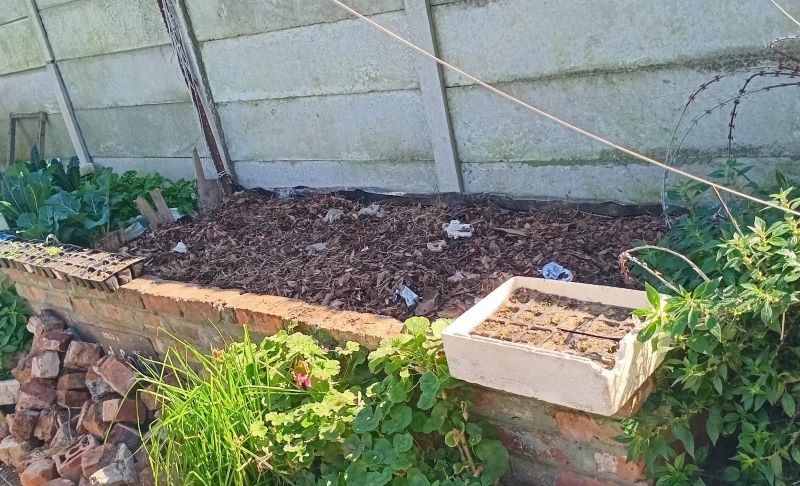 A long brick raised garden bed will not rot like wood and holds water without the need for plastic. Holding water is the key to veggie garden success in our climate.
12th
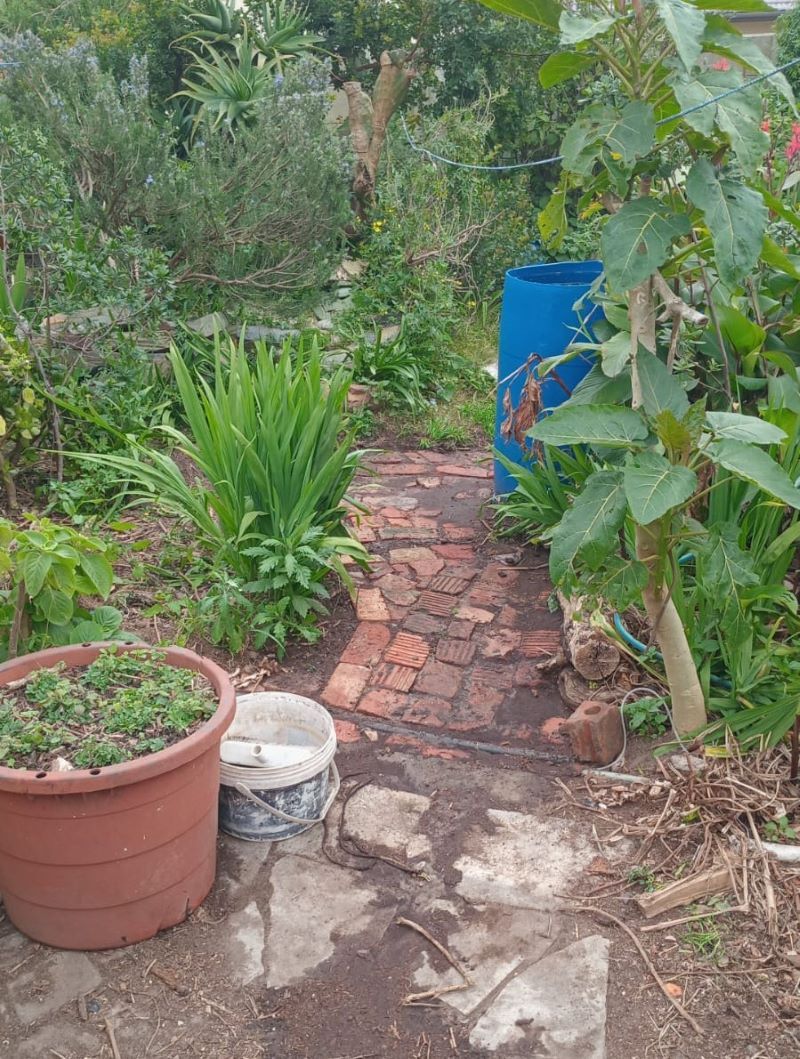
I worked alone on the path past the back pond and water tank, laying out the bricks in position for two hours but then it got too hot to go on.
13th
Today a friend who loves ecological issues and gardening visited and gave me a lot of seeds from a seed swap. For the second day I worked on laying the brick path, digging the bricks in and putting sand between them. I found one of the rosemary twigs I placed in water has developed roots !! A lovely moment in a week of discouragements.
14th
I finished the path and now all is smooth for my 96 year old mother and her walking stick to move along. I'm proud of my handiwork.
15th
George didn't come so I focussed on other garden work. I did a bit of weeding and removed the mulch and weeds from the fynbos patch. This is intended for nutrient extraction as fynbos likes low nutrient soil. Then I remulched the fynbos bed. As the mulch decomposes it absorbs nitrogen from the adjacent soil. When it is thorougly disintegrated the nitrogen has moved back into the soil, so I remove the mulch when it has blackened somewhat and apply fresh mulch.
I had a closer look at the fungus growing in my propagation pots. Another youtube myth bust. An online gardener advised doing cuttings in a sawdust and soil mix. The result was mushrooms taking over much room. The sawdust also caused waterlogging. Not a favourite with desert plants and fynbos !
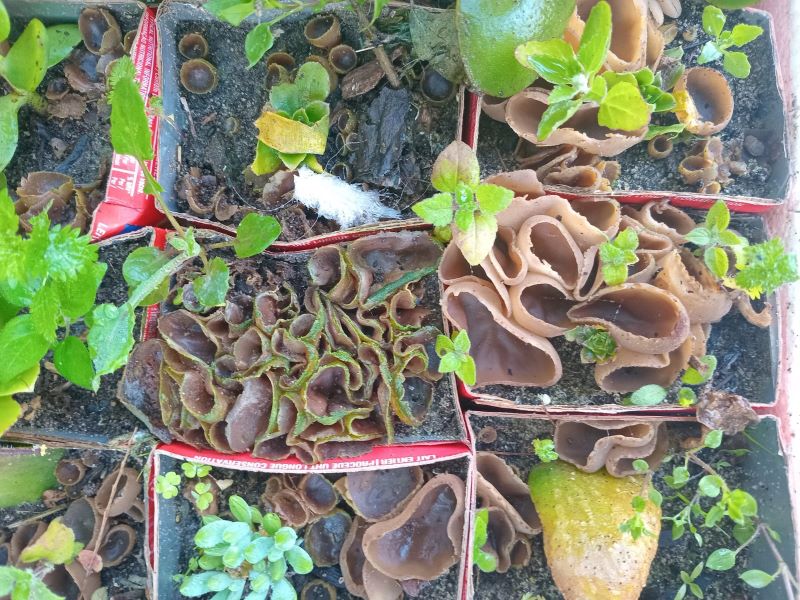 The consequence of trying to root cuttings in a sawdust heavy mix. Interesting fungal growth and very poor drainage.
Other work this month has been, besides frequent occupation with tax issues, our worm farming diary illustrations, finishing and getting my botanical painting scanned, caring for mum and taking her to the doctor and lots of research on topics around caring, coping with carer rage, propagating and growing about twelve different plants and pond problems. The pump packed up. The new one installed by a friend is too small, and needs frequent cleaning. These kinds of crises involve dropping everything else and can take days to get behind us. The fish are not being fed for long stretches as its cold and the water isn't circulating enough.
22nd
We finish making the enrichment pit, about a meter deep and a meter and a half in diameter. We had to saw off a few of the big Vichellia roots which made it difficult. The pit was then surrounded with big old wooden Vichellia logs too big to burn, and lined with old hardboard, which may be a mistake, because of toxins. We chucked light and rotten logs and the old agave bits in the bottom. Guava leaves ontop of that.
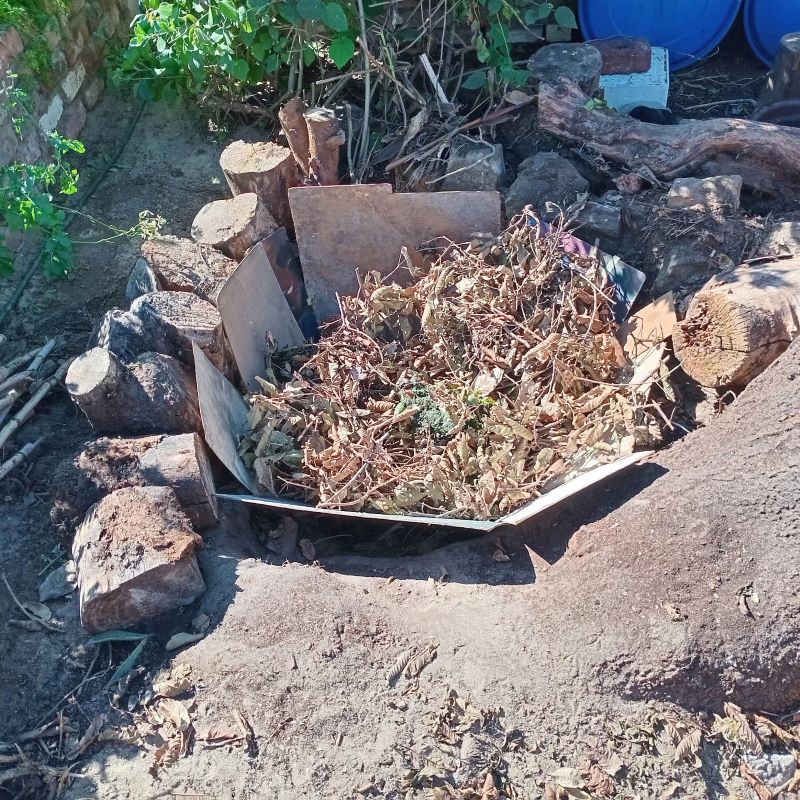 A compost pit as the core of an enrichment zone. It also receives the awkward garden waste like thorny Vichellia branches, rich in nitrogen, but horrible to handle.
I dug out and cut back the cannas round the pond that make extracting the pump flex impossible, and clearing an area for native plantings. We chopped up the canna and put it deep in the small planters. So far it has not emerged but the canna is obdurate and keeps sprouting up around the pond area which by November I'd redug three times now to remove the rhizomes. I trimmed the Carpobrotus edulis bed to get cuttings for surrounding the pits and securing the soil. I finished filling the new beds with sand from the pit, sprinklings of clay, fermented biochar, bones, eggshells and topped that with a thick 15cm layer of chopped green garden waste. I emptied the old disused wormbins onto that, and finished with natural sawdust from the tree cutting for the small planters and Ficus leaves from the street for the big one. The Madeira vine trimmings were chopped up and put to ferment in buckets of water, for biochar innoculation in the future. I harvested the first broccoli head from the pallet planter with brassicas. It was indescribably delicious. Home grown doesn't always blow you away. But lettuce and broccoli is special.
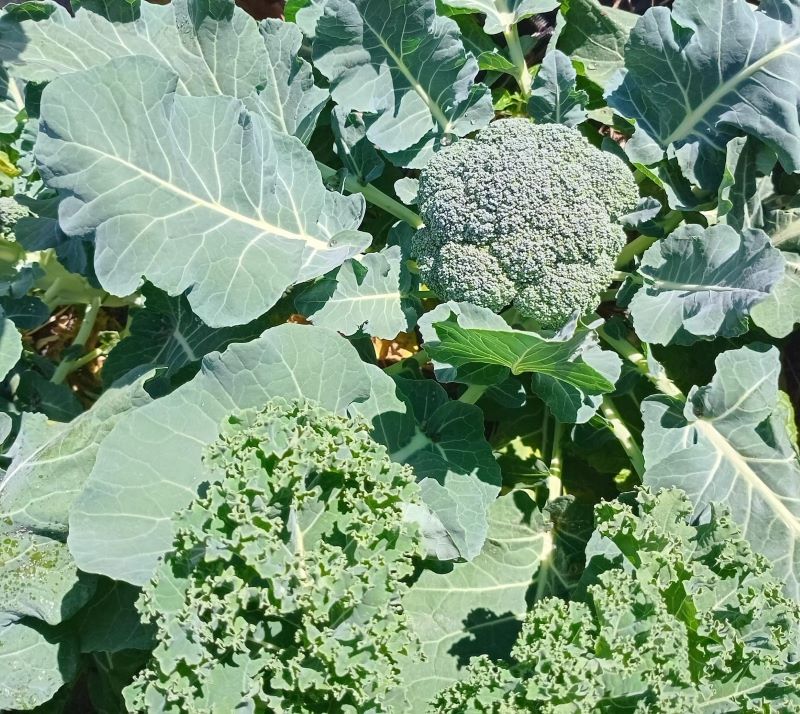 Success in growing broccoli for the first time. A few workarounds with propagation, soil and pest protection brought success.
23rd
I'm in a new phase of life. My time is no longer my own. Alarms ringing keep me out of flow, twenty seven a day, reminding me to do all the caring chores from mom to animals to myself. My gardening diary has become a confession of weakness, time weakness. The articles I used to write often took weeks of research. I just can't anymore, but I must keep my website alive and find new ways to engage.I think an honest record of my experiments, failures and successes is in many ways more informative than a well researched article based on second hand opinions, and possibly propagating a couple of gardening myths. Hard reality is what a diary records. Today I decide to have one alarm free day a week. Lets make it Sunday.
27th
I'm still working on de-nutrifying the spots in which fynbos will be planted. I can use the cannas to pull up nutrients and remove them by hacking back emerging growth and throwing it in the enrichment zone, so this morning I hacked back the sprouting canna and giant plectranthus or toilet paper bush (P. barbatus) to clear space for native plants. I discovered root nodules on the giant plectranthus, look it up. Interweb says the plant has no root nodules. Interweb says you can eat Canna indica shoots. I gave them a try, only the tiny slippery inner core were tender enough. About 3% of the shoot. I'll try any garden experiment once.
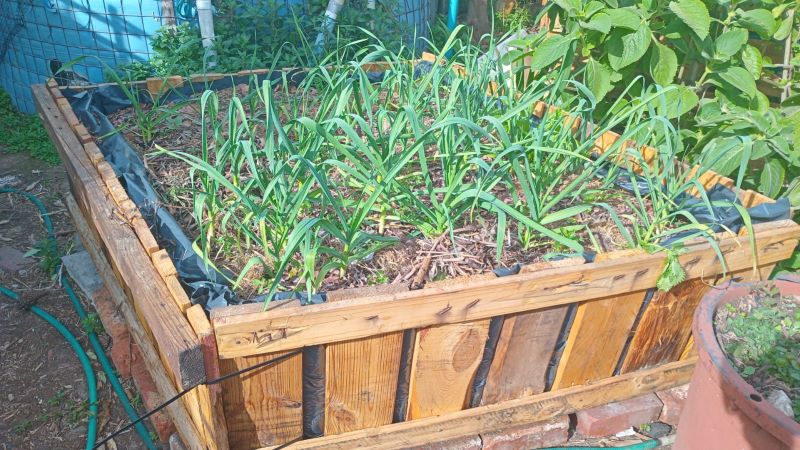 Growing garlic in a raised bed allows one to control soil and water. After years of trying unsuccessfully we had a good harvest.
30th
George dug over soil from a collapsing bed at the front. It was one of the first dead hedge walled raised beds he built and was rotting away and shedding twigs and soil. Underneath, between the plastic line and the soil, rats had made a tunnel. We left the plastic and buried logs in the ground and leveled the bed. While digging out the bed we harvested all the sweet potatoes, which were few and pencil thin. We took cuttings from the vines, replanted the vines with roots and transplanted a Chaya mansa plant, some rooted sweet potato and more Carpobrotus in the circle around the soil enrichment pit. Then together we put up most of the trellis infront of the pit. Last week I weeded the garlic and replanted some of the self seeded tomatoes there in the wall bed in the drive. I added leek ends left over after cooking to the garlic bed. I'm thinking about what to plant in these two wall beds which get so hot in high summer that nothing survives, even the amaranth looks sorry for itself.
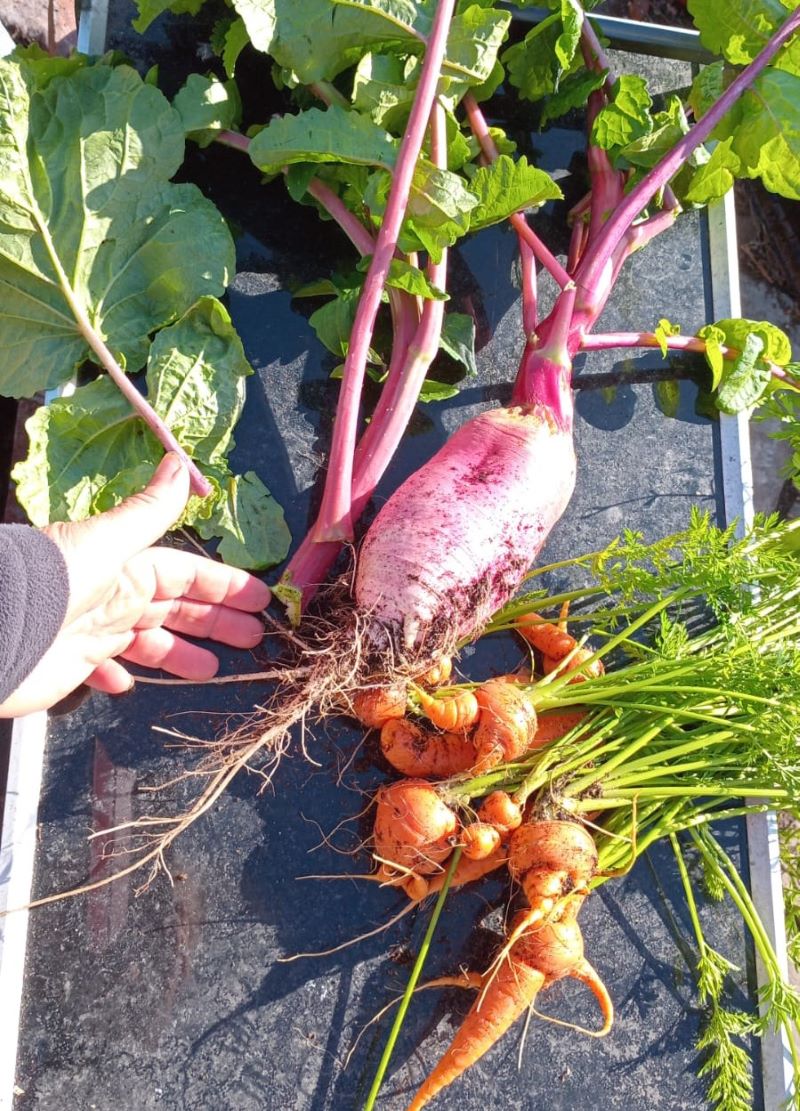 Some of my creatively shaped root crops. The sweet potato were so small the photograph didn't even read as sweet potatoes.
Introduction to the garden diary and the thoughts behind the new garden.
THREE WAYS TO REWARD MY WORK THAT WILL COST YOU NOTHING AT ALL. Dear Reader, in this age of AI created content, please support my human-made content. It requires a lot of research and garden experimentation, aka blood sweat and tears, the last ten years. You pay me back by signing up for the free newsletter (once a month, no spamming) at the top of the lefthand column or below. Please use the response form at the bottom of the page to respond directly to its content. If you find what I give you useful I would appreciate a share to the social media platform of your choice, the buttons are on the extreme right of your screen, Just click them !
Restore Nature Newsletter
I've been writing for four years now and I would love to hear from you
Please let me know if you have any questions, comments or stories to share on gardening, permaculture, regenerative agriculture, food forests, natural gardening, do nothing gardening, observations about pests and diseases, foraging, dealing with and using weeds constructively, composting and going offgrid.
Your second block of text...