3 ways to help the author that COST YOU ABSOLUTE ZERO ! see the bottom of the page.
October 2026
October is a season of growing in Cape Town, one of the best times of year to plant out summer crops
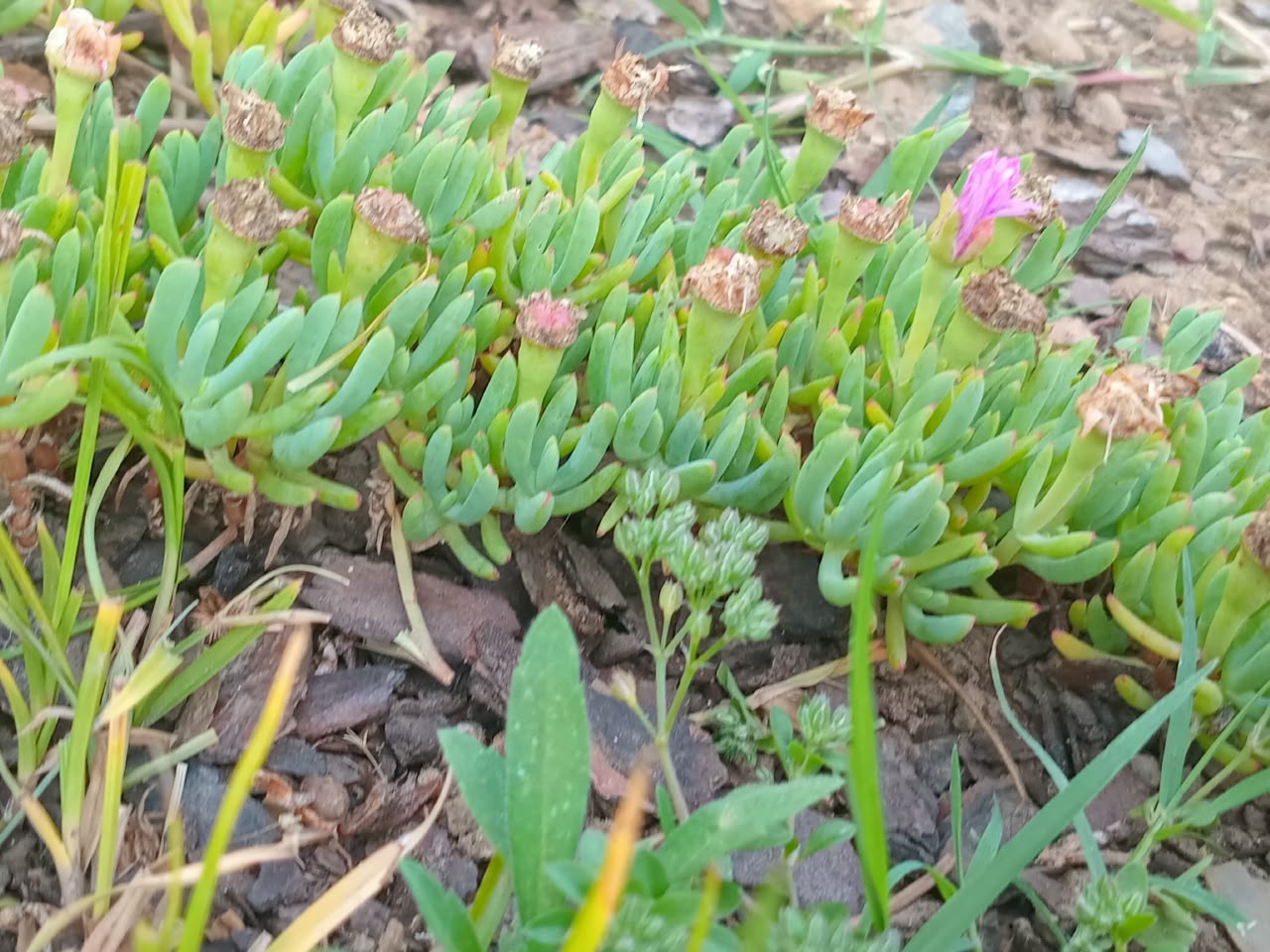 This tiny ice plant was covered in luminous purple flowers last week. A painted lady, our local monarch butterfly was feeding on them. Now there is a flush of new leaves before the dry heat sets in.
1st
I planted out the millies (maize) in three places.
4th
Worked with George on building a frame for the front in-ground bed to neaten it up and hold the mulch. We tore up newspapers, wet them and prepared two fresh worm towers but didn't see any worms because they towers have been unused for ages and the vermicast in them is no longer supporting worms.
5th
Tried wood chips as a mulch for sweet potatoes based on a youtube gardening channel. Mulched the front raised bed with straw and noemnoem tree debris compost which was rich and black and fibrous. Planted out some onion stalks from onions I thinned from the close planted onion bed. Sowed fresh broad beans at the front. Soaked the rest of my Madagascar beans
7th
Plant out zucchini and sowed Madagascar beans.
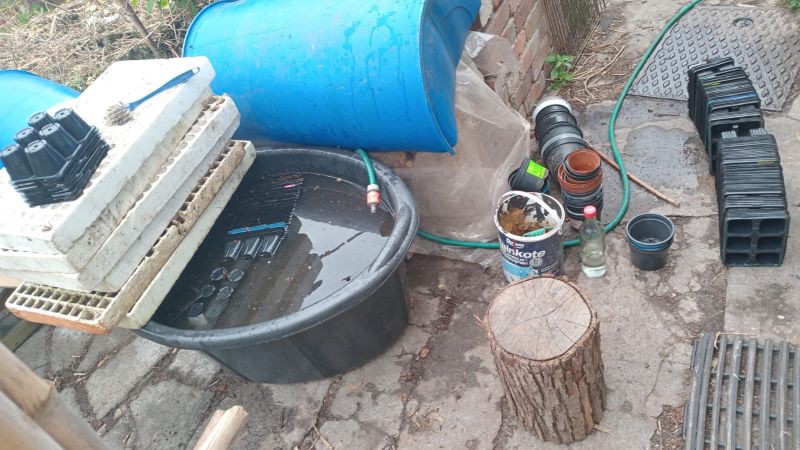 We found out how to get free seed trays by dumpster diving at a local nursery. They needed a thorough soaking and brushing after which I was thoroughly soaked too !
25th
Had some rain, about 90mm according to the old rain guage. We also had a spot of rain two to four days ago, which is great for the garden and lightens the watering load. Plants that are flowering are self the seeded cucurbit, the guava and the last of the banksia rose whose blossoms are browning at the edges. The self seeded black tomatoes are covered in fruit. They were never transplanted but just came up and grew to maturity in situ, only being pruned and trellised. Stephan's tomatoes from catalog seed have not been planted out yet. There do seem to be fewer tomatoes self seeding now, they seem to have a peak earlier in the season, pointing to an ideal window for planting in the future. The Chasmanthe is withering, and the garlic has been leaning over this last week or two. Now it is going from green to yellow in the entire bed in the last two days. I plan to harvest tomorrow, as a sunny day is forecast. I watered the bed unfortunately, but lightly I know I'm not supposed to, because I transplanted some onions into the garlic bed. The onions are all green still, the biggest bulbs golf ball size. I water them sometimes, like once a week at the most. I have done the last thorough thinning, but I notice that many are touching and it seems when they touch they don't get bigger. Thinning them now doesn't seem to help either. I must use better spacing next time.
Some of the onion transplants are doing well, others are leaning with a hard neck. We'll see. I tried the last lot leaving all the leaves instead of chopping them off to see if it helps with bulb building. Before this I planted them chopped off at 20cm after using the greens in the kitchen.
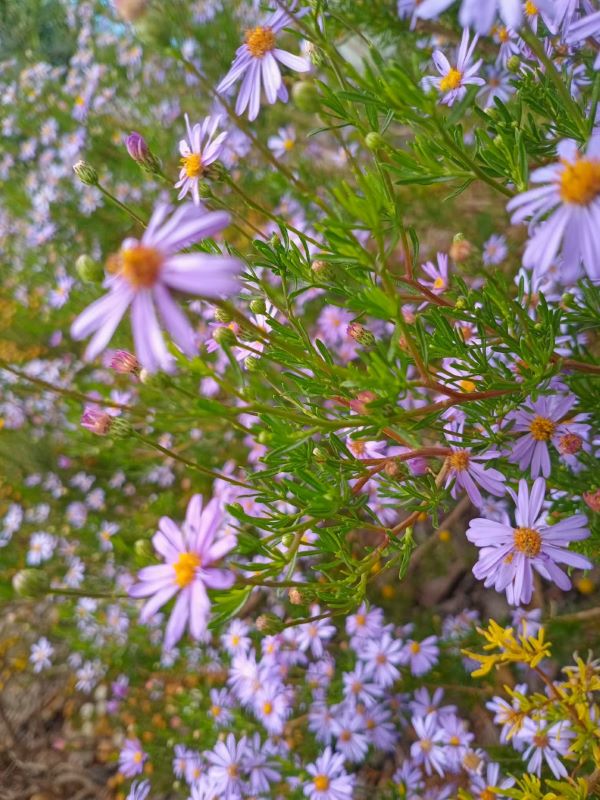 These gorgeous purple daisies, likely Felicias, at the stepping stone garden where I attended a propagation day for the next rehabilitation project the group are undertaking.
My fynbos transplants are looking ok despite not watering every day, but frequently. Only the Helichrysum petiolare on the south back bed is shriveling up. Perhaps I should shade it with some twigs. Its a very hot spot.
Zucchini and maize all seem good despite not watering every day. The Madagascar beans have not all come up, and some of my other beans did not come. They had probably been soaked too long. I think they were the purple ones that came up like hairs on a dog's back, but must wait for the pods to appear to confirm. The rattlesnakes with the same treatment did not come. All I have left in my seed bank are tons of rattlesnake seeds and a dozen or so long bean seeds, and lots and lots of Madagascar bean seeds, which probably are only about 10% fertile, judging from the germination of the last lot, or else they kill off their siblings somehow. The last time I sowed in clumps of five or so in each hole and only one would come up. They are slow growing, but very productive once they get going, hence my surfeit of dried Madagascar beans.
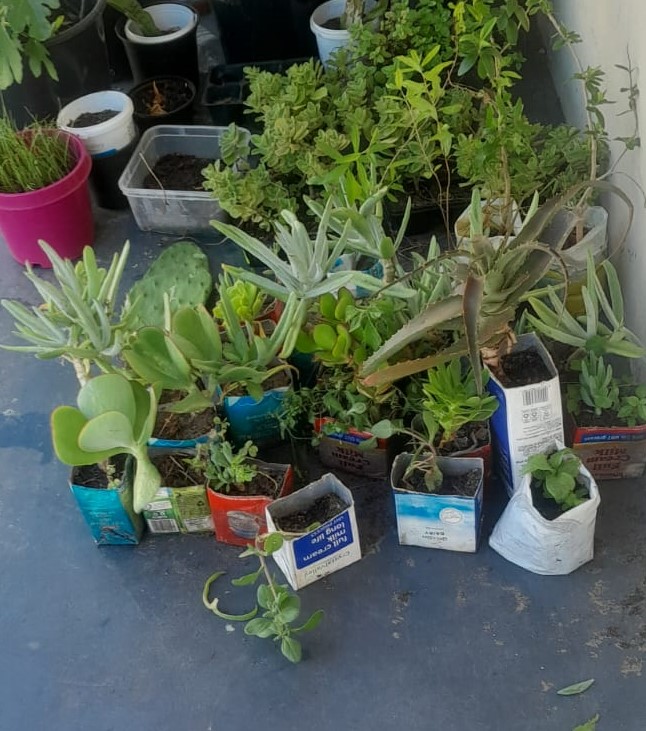 The stoep of a friend with a new garden. I always grow too much and I'm delighted to share what I've grown. He gifted me in turn with many of the seeds I planted this month.
I have sown some Madagascar beans in five buckets on the shady side of the house, and next to the wall beds on the south side, and at the trellis bases of the fireplace trellis that wants perennial vegetation. The bought seeds, longbean and lazy housewife had terrible germination, as I've previously mentioned, about one germination for sixteen seeds.
27th
As mentioned before in September I sowed lettuce seeds, Blue Peter beans direct and in sixpacks, rattlesnake direct, green pole beans in sixpacks, Lazy Housewife beans and Wellington Wonder beans in sixpacks, as well as green globe artichoke, asparagus argenteum, zucchini romanesco, zucchini costa romenesco, zucchini Italiano, golden maize, dandelion, marigolds, cosmos, tomatillo, cos lettuce, indigenous daisies, pak choi white stem, African daisy, tamarillo and allysum.
I've seen by now good germination in most, or else absolutely nothing. Very black and white. It lends me to think that I've done something wrong with the failed germination. If the seeds were merely not very viable as a rule I would have had poor germination. A couple would have at least germinated. The zucchini and maize are already in the garden and thriving and much to my delight the asparagus is looking promising.
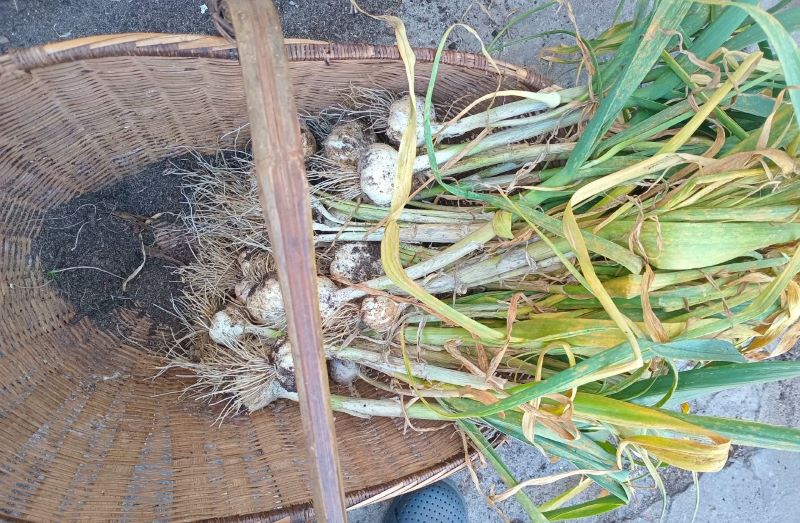 Harvesting garlic. I was bery pleased wiht the result. Every clove I planted produced something and the larger ones quite a decent something.
In the morning, while cooking in the black three legged iron pot on the fire, I harvested garlic, approximately twenty four bulbs of varied size. I've seen something I didn't know about. Clumps of garlic bound together at the basal plate with separate bulbs in a whorl, each with their own leaves. Though these clumps are large the individual cloves inside them are small so I'm not saving them. I saved six of the largest single bulbs and hung them in my room. The others I plaited together. It may be enough for about six months. If I plant double the amount in the next season we can go off grid with garlic. I was surprised to see that while onions develop on the surface of the soil, garlic is deep and I had to dig out the bulbs with a trowel because they were at least ten centimetres under the ground.
I plaited the leaves together and hang them up in clumps of three to cure. When they were papery I undid the plaits and plaited the kitchen garlic all into one big rope. three a side each side of one long plait. While drying the room was permeated by a heady garlic aroma, but that has faded now.
28th
My third sowing of broad beans are not doing so well. They showed irregular germination despite soaking because I've neglected watering them during emergence. Zucchini in the dappled shade are smaller and growing towards the light. None of the dill is emerging, also due to lack of consistent watering perhaps, or it may just need longer. The second sowing of broad beans in the drive were recently looking lovely, while the first sowing has withered to black stalks. Today the newer second sowing, despite watering yesterday, are looking wilty and dried up. Perhaps because of the heat and dryness, or that its the end of the broad bean season, or both. The onions are still very green, they are always lying down so that is no indication of readiness, so I watered them this morning. The onions planted as starts in the high bed are still very small compared to those planted at the same time in the dedicated onion bed. I guess they didn't get enough sun or water, and had competition from diverse plants too. The black tomatoes are turning red in the high bed.
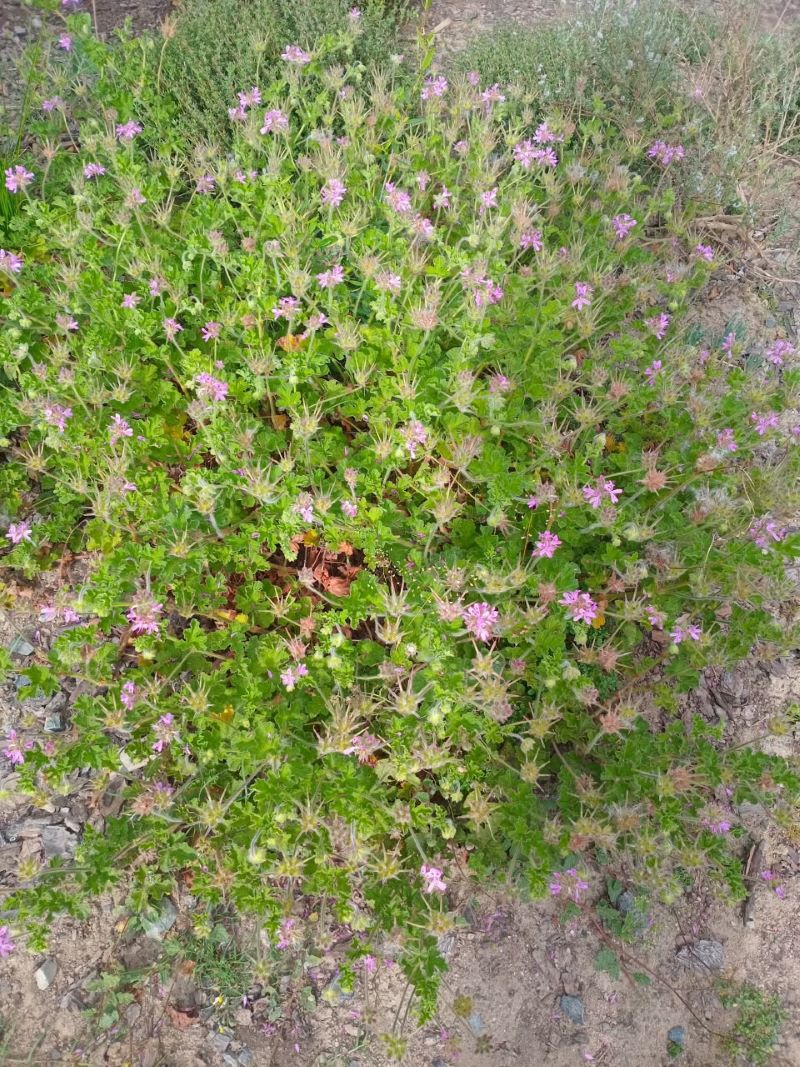 The Pelargonium in the rehabilitation garden were mostly over, having produced a lot of green unripe seeds. Their relatives in the Geranium genus are still producing a few flowers in my fynbos garden.
In the fynbos bed Geranium incanum and the red gazania seem to want to flower.
In the drive, against the north wall of the house the Tetragonia tetragonia or New Zealand spinach spread is huge, but no seeds are forming. The lettuce is producing yellow flowers now, the rocket has lent down and many pods are dry. Zucchini and maize growing together in the old cabbage bed are growing fast, and looking very green and fresh with very little water. They've covered the soil and shaded it completely. Seem to work well together.
By contrast the maize in the drive is folded and dessicated looking even when I water every second or third day. The drive bed is not water retentive like the other raised bed and it may be the soil dries out faster. The flea beetle ravaged kale seems to be slowly recovering after I removed the netting. Sometimes nets protect a plant and sometimes they keep the good carnivorous bugs out. I've noticed a few ladybirds on the kale now. Some of the new inner leaves are even whole.
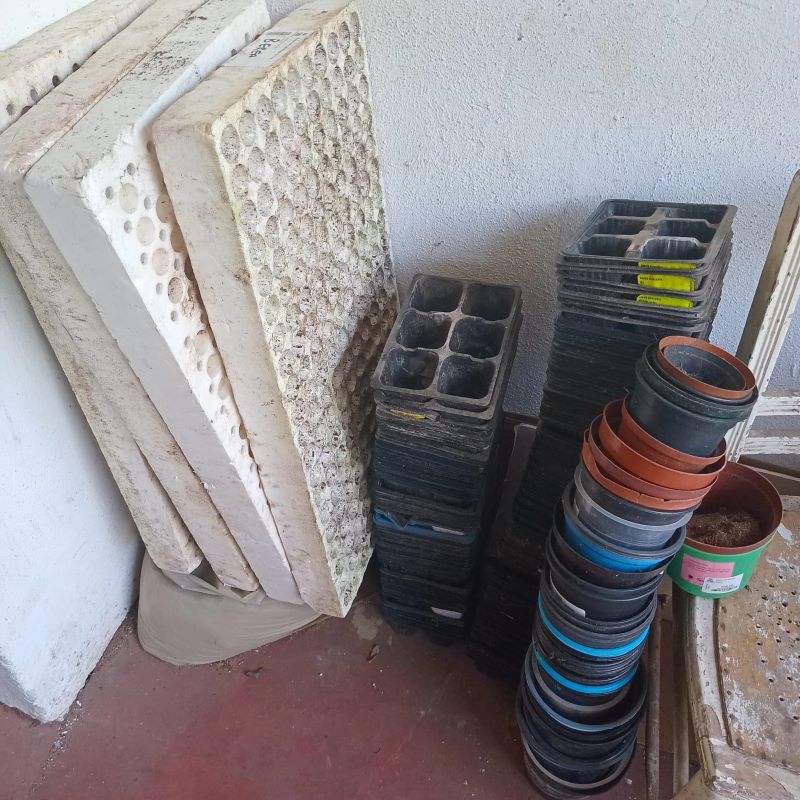 Free propagation trays. This was quite a score, there are not norally so many in the nursery's recycling container. These went to the stepping stone garden project.
The Vichellia thorn tree has little foot long sprouts now after being cut back to leave only its massive trunk. I didn't think it would grow again, but its a fighter.
The Madagascar vine is flourishing after a radical pruning and retraining and is hopefully going to shade Stephan's window soon so that his west facing room doesn't bake in summer. Many of the beans have emerged in the beds crowded with other plants but they stay stock still compared to those without other plants around, even if very very crowded with their own kind. For example I planted a dense forest of beans which came up and twined around each other and are deep green and absolutely healthy looking.
I sowed the moldy sunchoke tuber I'd been gifted and then threw it out later. Seeds of plantago and tamarillo went into pots in plastic bags and red sorghum direct after a one day soak and one day drain. Little white radicals where emerging when I put them in the ground, but they never got to sprout. Judging from the appearance of the soil they were dug up and eaten by mice. Some leaflets emerged in one of the 6 spots I sowed them and then disappeared after three days, with pits left in the soil. Mice or pigeons could be the culprits, or should I say beneficiaries of our bounty. The sorghum in the bin protected by strong rodent proof mesh are doing just fine.
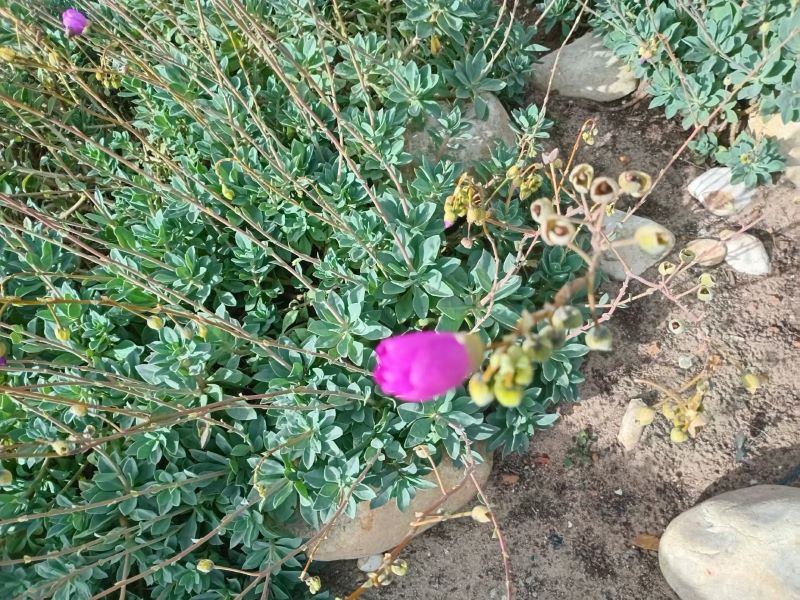 On the lookout for pretty flowers for my mostly indigenous waterwise cottage style garden, I saw these growing on a rocky bank. Cistanthe grandiflora from Chile is not uncommon in Cape Town gardens.
29th
The faster growers like zucchini and maize are now exploding with growth as said previously, but the marigold, cosmos, allysum and tomatillo seedlings are still small, though now they are past the two leaf stage and more recognizable. I think they need planting up to grow more as crowded in one pot could be stunting them. That means more trays and soil and I'm out of most of that. Watering has also started to take up more time and water, a whole hour and a whole hundred liters per session so I've divided it over three days. Its the barest barest minimum for exotic vegetables. I need to rig up the gray water irrigation system sometime. I had one before but the pipes were too narrow and they clogged up with biofilms after a year. Although watering and lifting cans is good exercise and meditative, I could better spend the time weeding and pruning. As said in the introduction, this is about how to grow food and native plants on a very limited budget of both time and money.
I have prepared four trays now, sixpacks for allysum, cosmos and marigold, and half cartons for tomatillo. I have had an idea... sprinkle the amaranth seeds everywhere I need a wind break or screen. Today the Dietes iris burst into flower and I'm so happy. I never saw the buds forming and they completely took me by (a delighted) surprise. They are indigenous to South Africa but not locally enough indigenous for true rehabilitation. Nonetheless they are tough and waterwise and that is a plus.
sitemap for links to all the articles
the Garden Diary introcuction and overview
THREE WAYS TO REWARD MY WORK THAT WILL COST YOU NOTHING AT ALL. Dear Reader, in this age of AI created content, please support my human-made content. It requires a lot of research and garden experimentation, aka blood sweat and tears, the last ten years. You pay me back by signing up for the free newsletter (once a month, no spamming) at the top of the lefthand column or below. Please use the response form at the bottom of the page to respond directly to its content. If you find what I give you useful I would appreciate a share to the social media platform of your choice, the buttons are on the extreme right of your screen, Just click them !
Restore Nature Newsletter
I've been writing for four years now and I would love to hear from you
Please let me know if you have any questions, comments or stories to share on gardening, permaculture, regenerative agriculture, food forests, natural gardening, do nothing gardening, observations about pests and diseases, foraging, dealing with and using weeds constructively, composting and going offgrid.
Your second block of text...