3 ways to help the author that COST YOU ABSOLUTE ZERO ! see the bottom of the page.
 The grey water recycling wiking bed, still giving good greens eight years on.
DIY Grey Water Wetland:
Grow
Abundant Harvests While Recycling Your Kitchen Grey Water
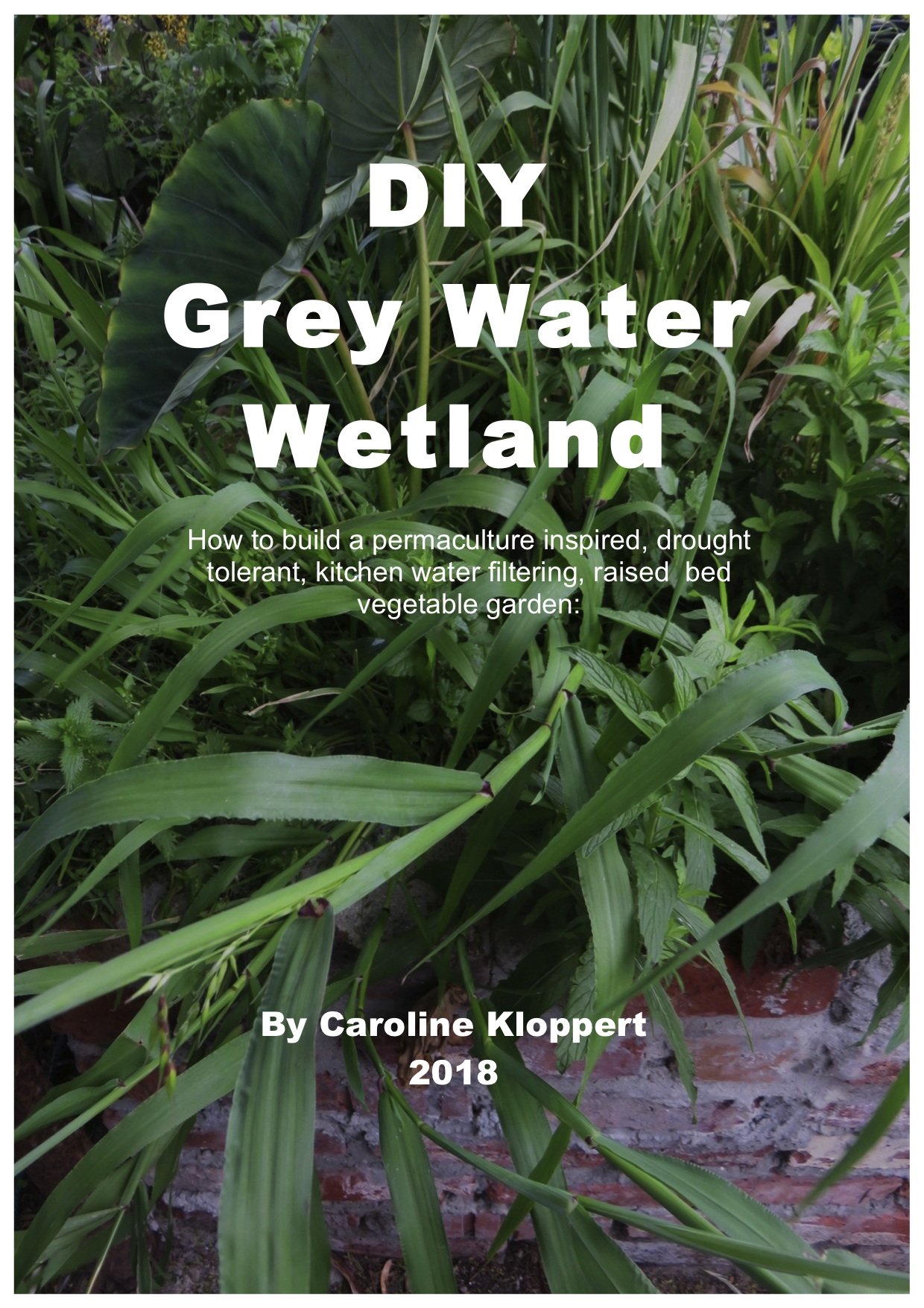
Discover a practical, budget-friendly way to reuse your kitchen grey water and grow healthy vegetables with the DIY Grey Water Wetland 2018.
This Amazon Kindle book shares a personal gardening journey in which the author herself built a wicking bed system fed by kitchen grey water that continues to produce lush crops after 8 years of continual use without changing the soil.
Why recycle Grey Water in Your Garden ?
During Cape Town’s devastating drought in 2017-2018, water scarcity made one thing clear: every drop counts. Grey water – from the kitchen sink, showers and laundry is a largely untapped resource that, when carefully managed, nourishes plants and saves precious mains water.
This book guides you through my process during the construction of a permaculture inspired, drought tolerant wicking bed system that safely filters kitchen grey water underground, supporting ongoing vegetable growth even through our six month dry season.
What makes this book different ?
It is written from a hands on and personal point of view. It is not intended to be a technical manual, but a straightforward, honest reflection on building and improving a grey water wicking bed at home.
Proven success
The wicking bed has given me over eight years of growing leafy greens like chard and lettuce, herbs and occasional experiments with other vegetables, all without needing to replace the soil.
Learning from mistakes
Includes practical advice to avoid pitfalls such as blockages with upgrades to larger standard plumbing piping.
Simple materials and low cost
Designed for home gardeners on a low budget, with reducible with reclaimed materials.
Safe and legal
Common urban regulations and meeting their standards is a goal.
From our online content to the Complete Guide
If you’ve explored our free grey water tips on https://www.greenidiom.com/recycling-grey-water.html, you’ve seen the basics, the plants that thrive in grey water wicking beds and how contaminants are managed.
The DIY Grey Water Wetland book expands on this information with:
Household product reference charts to know exactly what’s safe for your system
detailed construction diagrams, measurements and materials lists
step by step instructions, including critical worm filter and sediment flushing valve.
Troubleshooting advice for common challenges, odour control, and plant health.
Consider the book as the next step for dedicated gardeners ready to deepen their understanding and build a lasting grey water recycling system.
Take the next step: get your copy today !
If you want to explore grey water recycling and build a resilient, naturally irrigated garden, order your copy of DIY Grey Water Wetland 2018 on Amazon Kindle now.
Buy on Amazon Kindle – DIY Grey Water Wetland 2018
Join the community of sustainable urban gardeners making a difference - one kitchen sink at a time.
AN EXAMPLE OF WHAT READERS SAY:
"Enjoyed your book! Very informative and well-illustrated." - Claudia McBride, Oklahoma ★★★★★
Here you can master using waste water from your kitchen. To learn how to upcycle solid kitchen waste using worms visit this award winning website: https://www.worm-composting-help.com/
 After eight years of consistent crops, this winter's planting in the wicking bed.
THREE WAYS TO REWARD MY WORK THAT WILL COST YOU NOTHING AT ALL. Dear Reader, in this age of AI created content, please support my human-made content. It requires a lot of research and garden experimentation, aka blood sweat and tears, the last ten years. You pay me back by signing up for the free newsletter (once a month, no spamming) at the top of the lefthand column or below. Please use the response form at the bottom of the page to respond directly to its content. If you find what I give you useful I would appreciate a share to the social media platform of your choice, the buttons are on the extreme right of your screen, Just click them !
Restore Nature Newsletter
I've been writing for four years now and I would love to hear from you
Please let me know if you have any questions, comments or stories to share on gardening, permaculture, regenerative agriculture, food forests, natural gardening, do nothing gardening, observations about pests and diseases, foraging, dealing with and using weeds constructively, composting and going offgrid.
Your second block of text...