| Back to Back Issues Page |
 |
|
Restore Nature, Issue #27 April 16, 2026 |
HelloRESTORE NATURE NEWSLETTERApril 2026Gingerly experimenting with biochar activation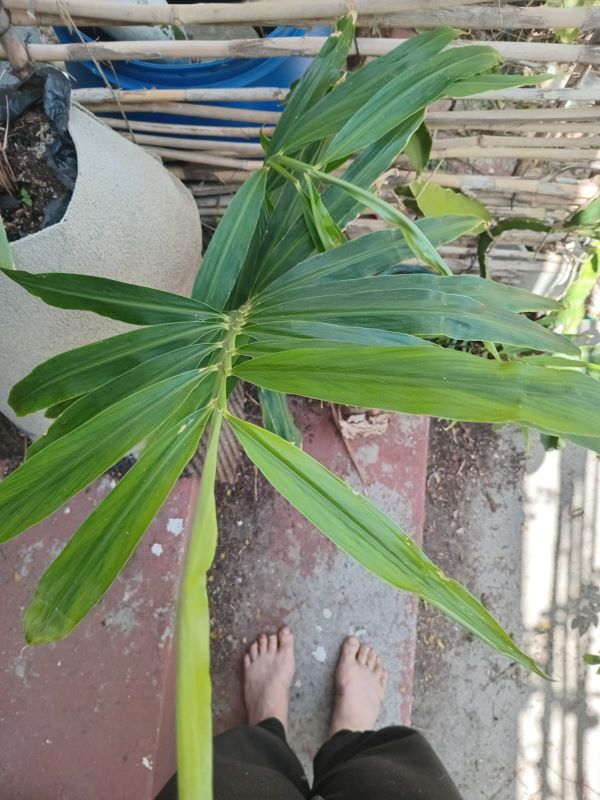
Hello everyone As a proper permaculture type gardener, I'm proud to say that I recently set about making a lot of biochar. I will go into my methods for making biochar elsewhere. I was prompted by a video online in which it was proclaimed that the best ginger harvests are grown in a very high proportion of biochar, ‘cinders’ and ash. It was also mentioned in the video, and in many places on youtube, that you can activate your biochar by soaking it in urine, and that two weeks was an ideal time to allow it to soak. As I’ve urine in oversupply from my caring activities at home, I decided to use what I had available. Below you can see the biochar soaking. More on this further down the page. 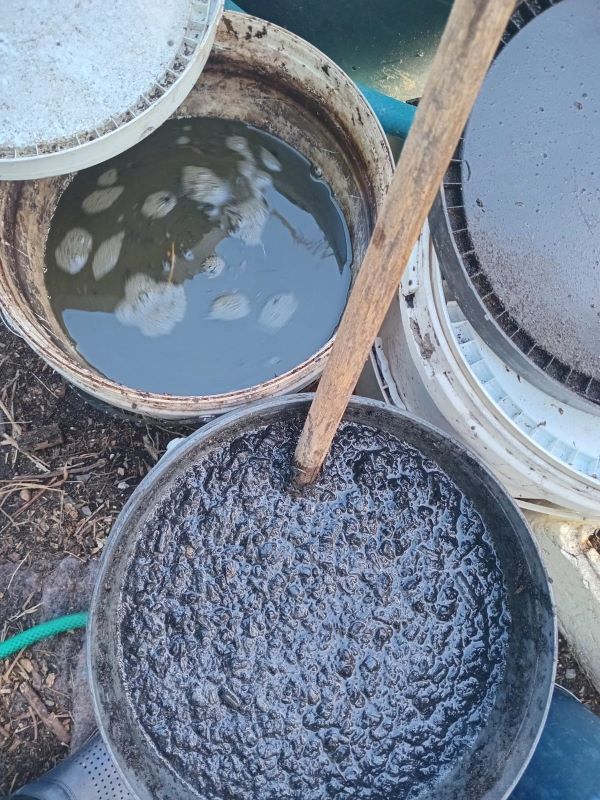 Before planting my ginger two weeks later I did some further research and found out to my horror that this common ‘knowledge’ about activating biochar with urine is misleading to say the least. The residue of char, half burned wood and ash from a fire soaking in urine gives rise to an extremely alkaline solution. Not only is the ash very alkaline, after all its was used to make soap before all kinds of purified sodas came on the market, but the urine while slightly acidic degrades into urea which is also alkaline. When I discovered this I was dismayed. But always checking my ‘facts’ I used my water test strips on the biochar and urine mixture to check the pH. It was way over 8.5, with a magenta red not even featuring on the chart, so its alkalinity may have been off the charts.
Below on the right you can see the first test result with all the tests I did later. 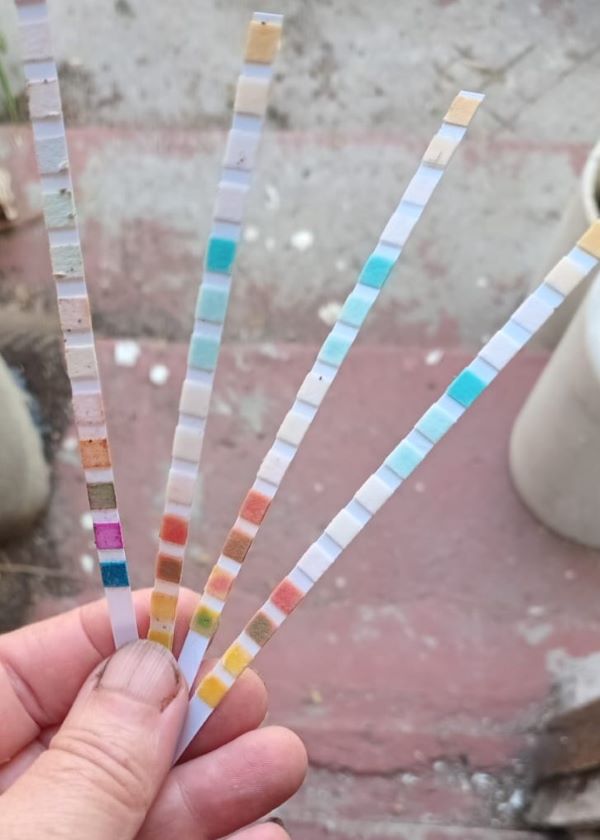 Further research on the pH requirements for growing ginger showed it prefers a slightly acid soil, from 5.5 to 6.5. For ease of understanding, alkalinity and acidity are opposites, either side of the neutral point 7. The needs of ginger for mild acidity would be the contrary of what the ash, charcoal and urine would supply. Furthermore approximately 30% biochar in a soil mix, with other draining media like vermiculite as suggested by a youtuber, would create a low nutrient environment and ginger is too heavy a feeder for that.
I set to work to reduce the alkalinity of the biochar solution. First I drained off the urine, then I soaked the forty liters of biochar in a 100 liter tub of water. The water from this I flushed down the drain, taking care not to flush ash and char with it. Then I put in fresh water and soaked the char overnight. The water around the char I drained off again, saving some as a mineral addition for fertilizing certain plants. I read at a later stage that the alkalinity of ash suspended in water disappears with time. This remains to be backed up with my own tests. 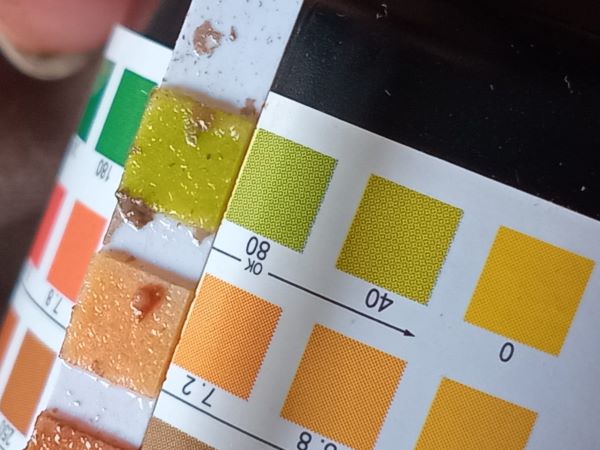 As seen above, after rinsiing the biochar thoroughly the liquid measured 7.2, or pretty close to neutral. I then shovelled the washed biochar into a bucket. To this I added 1/12 of a liter of volcanic rock powder, a 750ml bottle of some four year old kombucha that had become nasty, 6 liters of fermented leaf tea, the ferment that smells like cow manure, that you can see in the picture next to the biochar, and topped it up with 3 day old leaf soak that hadn’t fermented properly yet. The solution then measured a pH of about 6.8. I added 2 spoons of molasses to the bucket to acidify it further.
When the biochar had soaked in the buckets for two weeks I planted up three big flat containers with mostly compost and vermicast and a little biochar. In each planter I put about three pieces of ginger with sprouted roots and also some very successful ginger that had been growing in my own home made compost mix elsewhere. I should have learned from my first small success, but further experimentation is always a further learning experience. Two containers were planted with turmeric. 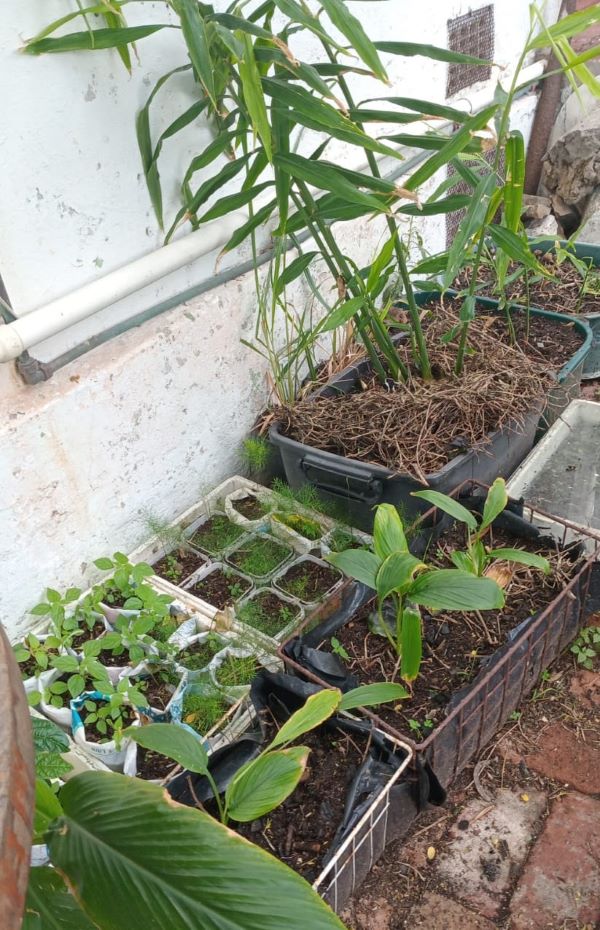 My experience with getting ginger to sprout is this. I used to plant it dry in compost rich well draining soil and then water it well. Ninety percent of the ginger treated thus would just melt away never to be seen again. However one root buried deep in a pot on my window sill and neglected for two years suddenly sent up a shoot, and its my biggest most robust plant currently, so this can happen. By and large my experience with growing ginger like this was frustrating.
Recently I read that the anti-rooting chemicals they spray on ginger in the stores need to be washed off. I followed instructions and soaked the ginger in water for 24 hours and then placed it in a dish of shallow water, literally just millimetres. With this method I had about 80 % success, growing rooted ginger with some green leafy sprouts within a month or so. The turmeric root was similarly responsive. The timing, though, was a bit off, with the shoots arriving at the start of our rainy cold Mediterranean winter. I’ll have to keep the new crop of ginger going for eight to ten months, right through our very wet and somewhat chilly winters by growing it under the house eaves. I may cover it with plastic to keep dry when there is a lot of rain forecast as our winters can be very very wet, but I will remove the plastic in drier weather. I don’t want mold to grow under the plastic. I don’t know how this will work. Ginger can be semi dormant through a mild winter like ours and only flourish again when the weather warms up. Someone whose opinion I trust says she lets her ginger grow and gain strength for at least two years before harvesting. Each different climatic region will need to apply a different practice here. Apparently ginger will thrive between 68 and 90 Fahrenheit or 20 to 32 degrees centigrade. It can only start growing at temperatures above 55 degrees Fahrenheit, or 13 degrees centigrade, and cannot take frost at all. Ginger likes plenty of water but not damp soggy soil as the roots will rot. Partial shade is recommended, especially in our blazing sunshine which kills vegetables that require full sun in Europe. My ginger thrives in a 50% sun and wind shade created by bamboo screening. Thank you friends. I hope you find this useful, enjoy your natural garden sanctuary Please contribute if you wish. I absolutely love it, not just because its good for the algorithms or robots or whoever is governing us, but because it turns this writing into a conversation rather than a lonely monologue. Topic suggestions welcomeYou may write to me anytime at the website greenidiom by filling out a comment. You can also use my webmail (website mail) address greenidi@greenidiom.com. Have you missed anything ?Please go to back issues right below if you want to catch up with what I've sent thus far as preamble for the course, as well as previous newsletters. |
| Back to Back Issues Page |